
Just what is a relic and what are their significance? In this article, you will find all that is to know about catholic relics; what they are, how they are made, and why they are held in such veneration by the Catholic Church.
Why Are Relics So Important?
It is strongly believed that relics can heal the sick, offer protection from harm, death and aliments, as these objects have been given the divine blessings of God, allowing the particular Saint to aid and watch over the faithful masses.
There are several verses in the bible that show the effects that these relics can have, and their significance for God fearing Christians:
(2 Kings 2:14) – Elisha took the cloak that had fallen from Elijah and struck the water with it, and as it divided to the left and right, and he crossed over.
(2 Kings 13:21) – So they threw the man’s body into Elisha’s tomb. When the body touched Elisha’s bones, the man came to life and stood up on his feet.
(Matthew 9:20-22) – The hem of Jesus’s cloak was able to heal a woman who could not stop bleeding.
(Acts 5:12-15) – People brought the sick into the streets and laid them on beds and mats, in the hope that Peter’s shadow may fall on some of them as he passed by.
(Acts 19:11-12) – Handkerchiefs and aprons that had touched Paul were taken to the sick, and used to cure their illnesses, and to drive out the evil spirits.
(Ex. 13:19) – The Israelites took Josephs bones when they departed Egypt, for he said “God will surely come to your aid, and then you must carry my bones up with you from this place.”
Canon Law
Canon law #1190 refers to the treatment and handling of relics:
#1. It is absolutely forbidden to sell sacred relics.
#2. Relics of great significance and other relics honored with great reverence by the people cannot be alienated validly in any manner or transferred permanently without the permission of the Apostolic See.
#3. The prescript of #2 is valid also for images which are honored in some church with great reverence by the people.
Where Can Relics Be Found?
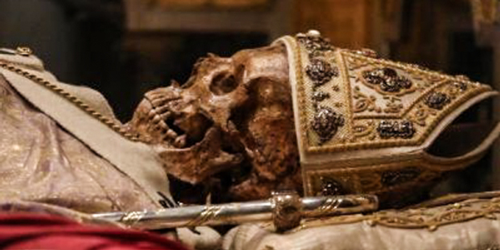
Relics can be found all over the world, more often in Churches, Chapels, or Museums. These relics may be kept inside a sepulcher – a type of tomb or burial chamber. The sepulcher could be cut into or beneath an alter, hidden from view, or on open display like the below image of Saint Ambro’ skeletal remains that are on display in a glass coffin in Milan, Italy.
Where Can Relics Be Found?
Relics can be found all over the world, more often in Churches, Chapels, or Museums. These relics may be kept inside a sepulcher – a type of tomb or burial chamber. The sepulcher could be cut into or beneath an alter, hidden from view, or on open display like the below image of Saint Ambro’ skeletal remains that are on display in a glass coffin in Milan, Italy.
Alternatively, the relics could also be stored in reliquaries, which are a form of container or box. It could be in the shape of the relic, or be an ornate box that may or may not openly display the relic.
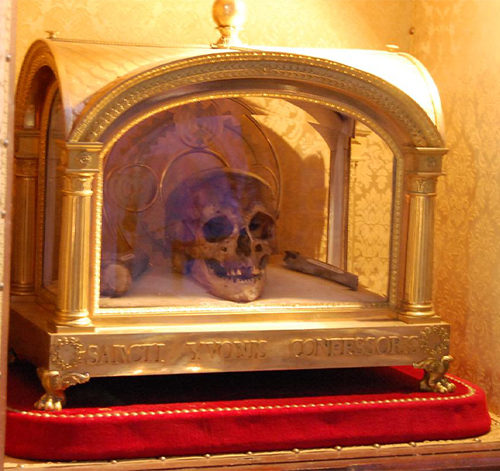
For example, the above image is of the remains of Saint Ivo of Kermartin, they are kept in Tréguier, Brittany, France, and stored in a reliquary that has ornate gold edging, and clear glass sides that allows you to view the relics within.
The Different Classes of Relics
The word relic is derived from the Latin word relinquo – meaning I leave, or I abandon. The Church recognizes relics as being one of three different classes; First Class, Second Class, and Third Class. There are some Catholics that feel that there is a fourth class that is separate from the third. For the purpose of this article we will be addressing the three classes, making note of the fourth where applicable.
First Class Relics
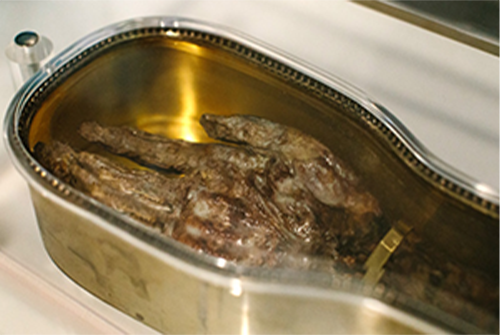
First class relics are the earthly mortal remains of saints, and are classified as being sacred relics. These remains could be any part of the body, be it bone, flesh (either skin or organs), and even hair.
As remains are considered to be precious and sacred relics, the Church has prohibited the sale of any first class relics. Custodians of first class relics are usually members of Faith Communities, or historical organizations such as Museums, rarely if ever, are first class relics entrusted to individuals.
Second Class Relics
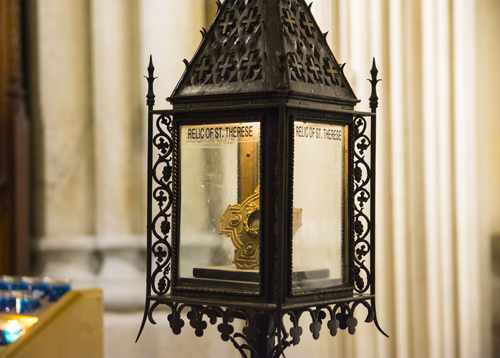
A second class relic differs from the first class, in that they are the possessions or tools that were owned or used by a saint during their lifetime. Items such as articles of clothing, vestments, jewelry, scepters, bibles, and hand tools, could all be considered to be second class relics, so long as they were used by a saint.
In the case of a martyr, the instruments of their demise may also be considered a second class relic. The tools used in the process of torturing or executing the saint, though morbid to some, can be just as powerful as a ring worn by a saint. This can extend to the wood used to make the cross to which they may have been crucified on, the rope they may have been hung with, or even the ashes from when they were burned at the stack, such as Joan of Arc.
Much like first class relics, second class relics are prohibited from sale by the Church. They are also considered to be sacred relics as well, and are rarely found in the possession of an individual.
Third Class Relics (Or Even Fourth)
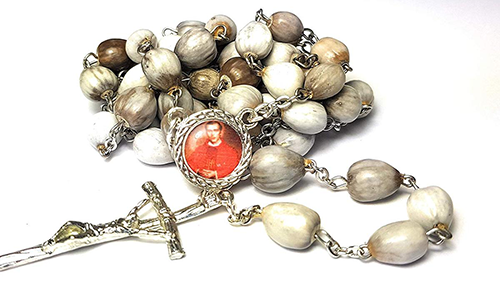
Third class relics are the only form of relic that the Church permits for sale. A third class relic is any item, new or old, that has made contact with the remains of a saint, or pressed against their tomb or reliquary; in other words a first class relic. This could include burial cloths that were used during their funeral process, the soil from which they were buried in, the remains of their casket, or newer items such as cloths, pendants, or mantillas, that have been blessed by God when placed against the first class relic.
Third class relics are worn, carried, or kept in the home, for protection, divine guidance, and assistance from their patron saint.